Friday, 8 August 2014
Barefoot; not about saving money!
A growing body of scientific and veterinary evidence shows the benefits of keeping equines barefoot. Yet here at Trelawne we have been alarmed by discussions in parts of the equestrian media that also extend to the tack room and livery yard, insinuating that saving money is a reason to ‘go barefoot’.
It is really important to emphasise that the financial aspect of not paying for horse shoes is secondary to hoof health, where barefoot equines are concerned.
In fact, barefoot advocates tend to choose ‘barefoot’ because of the health implications of maintaining horses without shoes, and using barefoot boots in certain circumstances.
We are keen to spread the word that there are many health benefits to a barefoot equine lifestyle, and these should be considered over any perceived money saving benefits.
So – you are considering removing your horse’s shoes – what can you initially expect from the transitioning process?
Transitioning is a term commonly used to describe a horse whose shoes have just been removed, and is in the process of getting accustomed to life without metal shoes. Usually, if there are no other problems, the best time to remove your horse’s shoes is at the end of a shoeing cycle, when your horse is due to be shod again.
Transition from shod to barefoot depends on many factors. How long and how well he has been trimmed and shod, how good his diet was, how much exercise he has been given / allowed, as well as things we are less in control of such as genetics and past or present injuries, all contribute to the soundness of the hoof you are removing the shoe from. When taking a horse barefoot, you are suddenly allowing the hoof to function to full capacity, which includes greatly improving the circulatory system and the firing of nerves.
Hoof boots help protect the hoof when transitioning from shod to bare, and also boost the hoof’s shock absorption properties on hard surfaces. With correctly fitted hoof boots, horses can still perform normally, including galloping and jumping.
Comfort pads may also be used within barefoot boots for extra cushioning. Pads help prevent peripheral loading, which occurs on any flat surface (whether the horse is shod or barefoot) and compromises blood flow.


Friday, 6 June 2014
Sole to Sole; taking a look at the equine’s sole with Lucy Nicholas
 The July edition of Local Rider Magazine featured an article written by our very own Lucy Nicholas from Trelawne Equine taking a look at sole of the horse’s hoof. In our latest blog we take a look at some of the extracts from the article. To read the full article; pick up a copy of Local Rider Magazine today!
Lucy says…
“The summer months can lead to hard ground, which can give extra concussive forces to all horses’ limbs and hooves. However, the healthy horse whose bare hoof is well maintained and that has an optimised diet and a managed exercise programme should be able to cope with different terrains and surfaces.
Having said that, with all horses, hoof health is a journey with peaks and troughs, and if you happen to be in a ‘trough’ when the harder ground strikes, your bare horse may become less comfortable.
Here are some examples of the causes:
1. He is post injury or surgery and hasn’t had the opportunity for regular exercise to ‘toughen’ the foot.
2. His feet are fairly flat, perhaps as he is still transitioning from horse shoes to bare feet, or because he isn’t getting enough stimulating exercise that thickens the horn.
3. He is affected by metabolic issues, dietary problems or low grade laminitis that means his feet are sensitive internally, and therefore uncomfortable on hard ground.
4. His feet are still on the journey to becoming optimised (the hoof takes around a year to fully re-grow) and parts are tender due to their shape and conformation.
Let’s consider the horse’s sole, and first remember that the hoof is an organ – only the animal’s liver and kidneys have a denser blood supply. The sole of a healthy hoof is ideally concave. Some breeds are more pre-disposed to flatter feet, however their management regime can influence concavity and sole thickness.
In a barefoot horse, the sole should be well-stimulated by exercise, as it is an important part of the weight bearing process. Various parts of the foot should also weight bear, including the frog, heels, and water line, the light-coloured inner layer of hoof wall. (The bars, the parts of the hoof wall that turn inward beside the frog, may also weight bear, although some ‘schools of thought’ prefer to remove the bar.)
However, a thin sole that hasn’t been sufficiently stimulated, a very flat foot or a hoof compromised by metabolic or dietary challenges may be challenged by this summer’s hard ground, and there’s a real risk of bruising of the sole’s live corium. This bruising can then cause sub-solar abscesses to occur.
Padding
Foam comfort pads worn inside hoof boots can be very beneficial in these circumstances. They help to reduce concussion, boost circulation and ultimately hoof condition, and can help improve the integrity of the hoof’s digital cushion and the internal and external structures of the hoof. Various thicknesses are available and 12mm density is the most popular pad, for everyday use. The pads are worn within hoof boots, which are used when you exercise your horse to aid comfort and shock absorption. It is important however to seek knowledgeable advice before using comfort pads, from a company experienced in their use.”
For more information about hoof boots and comfort pads or to receive bespoke advice about your barefoot horse contact Trelawne Equine or to keep up with our educational blog visit the website www.trelawneequine.co.uk.
The July edition of Local Rider Magazine featured an article written by our very own Lucy Nicholas from Trelawne Equine taking a look at sole of the horse’s hoof. In our latest blog we take a look at some of the extracts from the article. To read the full article; pick up a copy of Local Rider Magazine today!
Lucy says…
“The summer months can lead to hard ground, which can give extra concussive forces to all horses’ limbs and hooves. However, the healthy horse whose bare hoof is well maintained and that has an optimised diet and a managed exercise programme should be able to cope with different terrains and surfaces.
Having said that, with all horses, hoof health is a journey with peaks and troughs, and if you happen to be in a ‘trough’ when the harder ground strikes, your bare horse may become less comfortable.
Here are some examples of the causes:
1. He is post injury or surgery and hasn’t had the opportunity for regular exercise to ‘toughen’ the foot.
2. His feet are fairly flat, perhaps as he is still transitioning from horse shoes to bare feet, or because he isn’t getting enough stimulating exercise that thickens the horn.
3. He is affected by metabolic issues, dietary problems or low grade laminitis that means his feet are sensitive internally, and therefore uncomfortable on hard ground.
4. His feet are still on the journey to becoming optimised (the hoof takes around a year to fully re-grow) and parts are tender due to their shape and conformation.
Let’s consider the horse’s sole, and first remember that the hoof is an organ – only the animal’s liver and kidneys have a denser blood supply. The sole of a healthy hoof is ideally concave. Some breeds are more pre-disposed to flatter feet, however their management regime can influence concavity and sole thickness.
In a barefoot horse, the sole should be well-stimulated by exercise, as it is an important part of the weight bearing process. Various parts of the foot should also weight bear, including the frog, heels, and water line, the light-coloured inner layer of hoof wall. (The bars, the parts of the hoof wall that turn inward beside the frog, may also weight bear, although some ‘schools of thought’ prefer to remove the bar.)
However, a thin sole that hasn’t been sufficiently stimulated, a very flat foot or a hoof compromised by metabolic or dietary challenges may be challenged by this summer’s hard ground, and there’s a real risk of bruising of the sole’s live corium. This bruising can then cause sub-solar abscesses to occur.
Padding
Foam comfort pads worn inside hoof boots can be very beneficial in these circumstances. They help to reduce concussion, boost circulation and ultimately hoof condition, and can help improve the integrity of the hoof’s digital cushion and the internal and external structures of the hoof. Various thicknesses are available and 12mm density is the most popular pad, for everyday use. The pads are worn within hoof boots, which are used when you exercise your horse to aid comfort and shock absorption. It is important however to seek knowledgeable advice before using comfort pads, from a company experienced in their use.”
For more information about hoof boots and comfort pads or to receive bespoke advice about your barefoot horse contact Trelawne Equine or to keep up with our educational blog visit the website www.trelawneequine.co.uk.
Friday, 18 April 2014
The Functioning of the Frog and the Digital Cushion
With kind permission of Easycare Trelawne Equine’s blog takes a look at the functioning of the frog and the digital cushion in our latest blog.
The frog and digital cushion are often argued to be the most essential part of the horse hoof. The frog horn that is visible to the eye is made up of squamous epithelial tissue that has grown distally from the frog corium. The frog corium is made up of soft tissue that originates below the digital cushion. With every footfall, the frog and digital cushion work together.
At ground impact, the frog accepts shock and expands to dissipate force to the lower limb. Simultaneously, the proprioceptors of the heel region judge terrain and ground condition and react accordingly within milliseconds. As pressure is applied to the frog, the digital cushion is compressed under the short pastern, navicular, and coffin bone.
The vascular cartilage of the cushion is compacted, forcing blood flow proximally back up the limb of the horse. When the hoof returns to stride, the cartilage is re-supplied by blood flow.
The digital cushion has a responsibility of providing angle to the coffin bone. A healthy, firm cushion provides a pedal angle range of 1 to 6 degrees but this may vary depending on veterinarian or hoof care practitioner preference. A digital cushion that is neglected or has not been allowed to develop properly is fatty and soft. Often times, with an underdeveloped cushion the pedal bone will respond by “falling” in the hoof capsule; losing its positive angle and accepting a negative angle.
Several causes exist for debilitation of a digital cushion including poor diet and lack of exercise. Loading the hoof wall, such as applying standard metal shoes, hinders the ability of the frog to make contact with ground surface. It can be challenging to maintain a robust frog and digital cushion when inadequate interaction between terrain and heel occurs.
However, removing shoes from a horse that has been shod for years and has possibly acquired meager frogs and cushions can be a daunting undertaking. The solution in this case would be to use hoof boots to protect the comfort of the equine during a transition period and throughout a developmental stage, allowing the equine’s hoof condition to improve without the burden of shoeing but without incurring other associated hoof problems until the horse is able to be fully barefoot optimising the functioning of the frog and the digital cushion.
A range of hoofboots from the Easycare range are available through Trelawne Equine and their distributors. To find out more about the hoofboots available visit the website www.trelawneequine.co.uk
Reproduced from the original post by Easycare http://www.easycareinc.com
Friday, 11 April 2014
Spring Changes Advice from Trelawne Equine
Horse owners everywhere are welcoming spring after the miserably wet winter months but now ‘spring has sprung’ what do horse owners need to consider in order to provide the best care for their horses and ensure optimum health? In our latest blog Trelawne Equine takes a look at the main points to consider in spring regarding the changes which occur to equine diet and lifestyle.
Spring is a transition period for both horse owners and the equine as often turnout time increases and as the weather and level of light does too, in many cases so does the amount of riding! These changes to our horse’s routine alter the equine’s nutritional requirements, whether that means a reduction in feed required due to increased turnout or an increase of nutrients needed if the horse’s workload has been ‘upped’!
Due to the equine’s sensitive digestive system it is always wise to approach any changes with caution.
Trelawne Equine Advises for Spring Changes
As we head into spring stand back and take a good look at your horse or pony to assess their body condition and decipher whether your equine has lost or gained condition over the winter. Doing this provides a clearer picture as to whether you need to be more cautious with spring grazing or whether your equine will need extra feeding to provide sustenance for an increased spring workload.
For most horse owners the combination of warmer weather, increased light and the showing season typically results in an increased workload for spring. It is essential that your horse is fit enough for this increase so it can be helpful to devise a fitness plan which allows for a gradual increase in work. Remember when considering feeding in relation to workload to be honest about the amount of work that your horse really does.
Equines may require an increase in feed as any fitness work steps up to prevent weight loss and to fuel the body and the muscles with what they need to work. Remember fibre is the most important aspect of your horse’s diet so always increase the level of forage, such as hay or grazing prior to increasing concentrate feed.
For some, the arrival of Dr Green in the spring months is a welcome sight, but for others this is not always the case. If the horse is a good-doer or prone to laminitis horse owners must restrict access to lush pasture limiting the horse’s ability to gorge on the nutrient rich grass. This does not mean by end means not to allow your horse turn out but simply to manage it wisely by sectioning off smaller areas and inducting them into their increased turn out time gradually.
If your horse is lucky enough to have 24/7 grazing why not consider running a flock of sheep in the pasture to help your horse chomp down the nutrient rich pasture?
As always, the best measure of correct management is to listen to your horse itself. Monitor his weight carefully using a weigh tape and assess his attitude, temperament and willingness to work. Always give your horse the time he needs to adjust to change and ensure any alterations to the exercise or feeding regime are completed gradually. Our horses often give us the answers we need if we listen carefully enough!
Wednesday, 26 March 2014
Common Hoof Booting Problems
In our latest blog Trelawne Equine takes a look at common hoof booting problems with advice from Lucy Nicholas author of The Barefoot Horse; An Introduction to Barefoot Hoof Care and Hoof Boots.
Lucy says…
“With all makes and models of boots, you could encounter a problem, but this is usually to do with either the boot not being the best fit, or the horse’s hoof not being in the best condition at the time.
Sometimes, especially when going barefoot after a hoof problem or poor shoeing, you will have to compromise with the fit, which will make it more likely to fail.
There is often a way to help fit on most occasions with most makes of boot; the manufacturer or retailer will usually be very helpful and able to advise on your horse’s individual needs. Trelawne Equine are on hand to advise regarding hoof boots through their website just always make sure you supply current measurements if seeking help, as well as the type of boot you are using and any gait or conformation abnormalities your horse may have, such as dishing or being pigeon toed for the team to be able to help to the best of their ability.
Common Problem 1: Twisting
Twisting can be a simple indication that the boot is either the wrong shape or too big; if you are able to twist the boot yourself more than around 5 degrees when the horse’s foot is up, this is probably the likely cause, and a smaller size or alternative model should be tried. It goes without saying that the better the boot fits, the less likely it is to twist, but if the horse has a natural twist in his gait (common in hind feet, or horses that dish), the correct fit is even more important, as the horse will be exerting unnatural pressure on the boot to force it to move.
If the boot fits well but still twists, you need to try and get the boot, and especially the width, as tight (without causing restriction) as possible. Some boots, such as Old Macs, produce specially designed inserts that fix in the side of the boots to allow a tighter fit on the width at the top of the hoof.
A brushing action can also twist a boot; if your horse’s legs move close together. Try using thick brushing boots or fetlock boots behind, such as sheepskin lined versions or even a sausage boot, will usually keep the coronet bands far enough apart to prevent the horse from catching the boot and knocking them off centre.
Common Problem 2: Rubbing
Rubbing will often occur if the boot is too small, the wrong model or fastened too loose – check your measurements again and try a different model or the next size up to see if that fits better. Make sure the foot is really on the sole of the boot, and not crushing the heel. One way to check the length of the hoof inside the boot is to put the sole of the foot flat on the outside of the sole of the boot; this will show you exactly where the hoof is sitting inside the boot; if there is any overhang it is pretty safe to say that the hoof is not able to comfortably sit flat inside the boot, which will can cause rubbing, as the upper will be under more strain.
Rubbing is usually more common in horses with under-run heels, where the measurements for length have not been taken into consideration, thus making the bulb of the heel ‘larger’ than anticipated, and the boot too short. Boots that fit above the coronet band have the potential to rub, as they are making contact with more soft parts of the horse’s hoof and leg; some boots have special wraps or gaiters that act as ‘socks’ to help protect sensitive skin. Just like humans with new shoes, your horse will need a period of adjustment to wearing boots, to not only break the boots in, but also allow the horses body to become accustomed to them, like our own feet do. For boots that do not have their own ‘socks’, you can experiment with a fine woollen sock, elasticate support bandage (tubi-grip) or cohesive wrap, to find out what works best for your horse. However, you should only try these solutions when you are sure the size and fit is correct, and the only issue is that your horse is particularly sensitive, the boots are new / your horse is not used to wearing them, or you are doing a lot of miles in them.
To find out more about hoof boot advice Lucy Nicholas’s book ‘The Barefoot Horse- An Introductory Guide to Barefoot and Booting’ is available from The Saddlery Shop. Click here to find out more!
Friday, 28 February 2014
Top Racehorse Bares All with Forward Thinking Trainer Simon Earle!
 Simon Earle trains national hunt and flat horses, and 90% of the equines he trains are barefoot. He says the team’s main aim is to maintain horses that are fit, healthy, happy, well educated and sound - Simon says this combination ultimately leads to racing success. “Be it barefoot or with correct shoeing, soundness is of the utmost importance to enable me to train a horse successfully,” Simon says.
He has good statistics to back up his beliefs that 'bare is best': "Our yard hasn't had a tendon strain in over seven years..... in fact I can't remember the last one we had," he says of his horses.
“My reasons for managing the horses barefoot where possible is that we see too many horses break down [within the racing industry, where they are commonly shod], and when this happens, I have always wanted to know why. All too often, it is down to the foot and there is no truer saying than ‘no foot, no horse’. I feel that prolonged shoeing of the horse can, in some cases, make the hoof migrate forwards, becoming too long in the toe, and with under-run heels,” Simon adds.
"Being barefoot enables the horse’s hoof to function naturally..."
“All of this puts more strain on the tendons and ligaments. Being barefoot enables the horse’s hoof to function naturally, and it is much easier to keep the horse’s balance right, and have weight bearing heels in the correct place, rather than under-run. We definitely have less joint problems [with the horses that are bare, when compared to the overall racing industry].”
However, ten per cent of Simons horses are shod - why is this? “In my experience, some horses do not take to being barefoot, be it physically or due to time required to maintain their feet bare, and I am aware of the responsibilities of the trainer to the owner to see their horse running,” he states.
“I assess every horse that comes into the yard with my farrier, and after discussion with the owner, we make a decision on whether to use shoes or keep the horse bare,” Simon says.
The UK's most successful barefoot competition horse?
Red Not Blue is a ten year old bay gelding by Blueprint, owned by The Plum Merchants, trained by Simon Earle, and ridden by many leading jockeys including Andrew Thornton and AP McCoy. The National Hunt racer has his own twitter handle - @RedNotBlueHorse - and a cheeky attitude - recently tweeting Horse and Hound magazine when they featured a supposed lightweight horse shoe that could potentially help a horse go faster, saying: "Who needs shoes! Why pay silly money on shoes when you can go barefoot! #stillwinningraces." The horse recently ran at Newbury with jockey Dominic Elsworth, coming third and qualifying for the prestigious Pertemps Final, taking place during the Cheltenham Festival in March 2014. Red Not Blue has earned around £70,000 in his career and is a leading example of a successfully managed barefoot horse excelling in his discipline.
So who said Thoroughbreds can't go barefoot?
Simon Earle trains national hunt and flat horses, and 90% of the equines he trains are barefoot. He says the team’s main aim is to maintain horses that are fit, healthy, happy, well educated and sound - Simon says this combination ultimately leads to racing success. “Be it barefoot or with correct shoeing, soundness is of the utmost importance to enable me to train a horse successfully,” Simon says.
He has good statistics to back up his beliefs that 'bare is best': "Our yard hasn't had a tendon strain in over seven years..... in fact I can't remember the last one we had," he says of his horses.
“My reasons for managing the horses barefoot where possible is that we see too many horses break down [within the racing industry, where they are commonly shod], and when this happens, I have always wanted to know why. All too often, it is down to the foot and there is no truer saying than ‘no foot, no horse’. I feel that prolonged shoeing of the horse can, in some cases, make the hoof migrate forwards, becoming too long in the toe, and with under-run heels,” Simon adds.
"Being barefoot enables the horse’s hoof to function naturally..."
“All of this puts more strain on the tendons and ligaments. Being barefoot enables the horse’s hoof to function naturally, and it is much easier to keep the horse’s balance right, and have weight bearing heels in the correct place, rather than under-run. We definitely have less joint problems [with the horses that are bare, when compared to the overall racing industry].”
However, ten per cent of Simons horses are shod - why is this? “In my experience, some horses do not take to being barefoot, be it physically or due to time required to maintain their feet bare, and I am aware of the responsibilities of the trainer to the owner to see their horse running,” he states.
“I assess every horse that comes into the yard with my farrier, and after discussion with the owner, we make a decision on whether to use shoes or keep the horse bare,” Simon says.
The UK's most successful barefoot competition horse?
Red Not Blue is a ten year old bay gelding by Blueprint, owned by The Plum Merchants, trained by Simon Earle, and ridden by many leading jockeys including Andrew Thornton and AP McCoy. The National Hunt racer has his own twitter handle - @RedNotBlueHorse - and a cheeky attitude - recently tweeting Horse and Hound magazine when they featured a supposed lightweight horse shoe that could potentially help a horse go faster, saying: "Who needs shoes! Why pay silly money on shoes when you can go barefoot! #stillwinningraces." The horse recently ran at Newbury with jockey Dominic Elsworth, coming third and qualifying for the prestigious Pertemps Final, taking place during the Cheltenham Festival in March 2014. Red Not Blue has earned around £70,000 in his career and is a leading example of a successfully managed barefoot horse excelling in his discipline.
So who said Thoroughbreds can't go barefoot?
Friday, 21 February 2014
The Saddlery Shop; leading Hoof Boot Retailer
Did you know The Saddlery Shop offers a huge range of equine hoof boots building up a trusted reputation over a number of years. The Saddlery Shop is recognised as the country’s leading equestrian barefoot retailer holding the largest stocks of hoof boots and accessories in the UK!
In addition The Saddlery Shop is a respected authority on booting barefoot horses. The Saddlery Shop aim to have all the information you as a barefoot horse owner would need in order to choose the best hoof boot for their horse including ample information on each type of boot, it's use and it's suitability for each horse. In addition The Saddlery Shop offers free specialist hoof boot advice by email or telephone from one of our booting experts, including Lucy Nicholas the author of 'The Barefoot Horse'.
Hoof boot enquiries are treated as priority and usually answered within 4 working hours! To see the huge range of equine hoof boots, books, cushioning pads and inserts and equine barefoot maintenance tools such as rasps visit the website www.thesaddleryshop.co.uk.
Friday, 5 July 2013
Avoiding Measuring Mishaps with Advice From Easycare and Trelawne Equine
EasyCare direct and Trelawne Equine, who stock Easycare boots often spend much of their day assisting customers with boot sizing.
This is because there are many different factors that should be taken into account when fitting boots,particularly the accuracy of the measurements. Fit is easily the most important factor in selecting boots and should not be taken lightly, a bad fit can cause a variety of issues such as rubbing, boot loss, and product failure. Accurate hoof measurements are the essential first step in the fitting process.
Easycare state that actually getting accurate hoof measurements is not that easy! So here is a useful guide to some measuring tips exclusively from Easycare
Helpful Measuring Tips
Follow the EasyCare measurement guide
1.) Measure after a fresh trim
2.) Measure to the heel buttress line, not the heel bulbs
3.) If possible, use a metric ruler since millimeters are more precise than inches.
4.) Do NOT trace for an accurate view after the event take pictures
5.) It also may be helpful to have someone else take measurements and compare them to your measurements
Remember if you have any questions or queries you can always call the team at Trelawne, dedicated distributor of Easycare boots who are always happy to advise.
For more information visit the website www.trelawneequine.co.uk or telephone a member of the team on Tel: 0844 257 8585
Friday, 10 May 2013
Managing Laminitis with the Easyboot RX
 The term Laminitis describes a condition which sadly affects many horses and ponies in the UK. The pain associated with the disease is caused by inflammation of the internal laminae tissues which in some severe cases can result in the epidermal and dermal tissue bonds which join to the hoof wall becoming torn and damaged.
Laminitis is particularly prevalent during the Spring and Autumn months when the grass is of optimum quality as a result of weather conditions typically bringing both rain and shine. The condition is often linked to obesity and poor diet but it is also associated with; stress, toxaemia, mechanical trauma, hormone problems and some steroid treatment.
Low-grade laminitis caused by dietary triggers such as spring grass can go unnoticed in the shod horse, as shoeing decreases hoof blood flow, causing loss of sensation. However, in the barefoot horse, with full hoof sensation and heightened sensitivity on rough ground when low grade laminitis is present it is seen earlier. This is great news as the condition can be spotted earlier and management can be implemented but what do we do to support our horses suffering with either low level, acute or chronic laminitis?
The first stop if you think your horse may be suffering from laminitis is always your veterinarian. If diagnosed with laminitis the Easyboot RX can provide the ideal therapy hoof boot for our equines. A horse or pony diagnosed with laminitis requires sole support. This can be achieved by using the RX boot on a bare (non shod) hoof as the boot is equipped with shock absorbing Easycare comfort pads inside. The supportive and stabilising boot allows the horse to benefit from increased circulation and undertake controlled exercise or turnout once the hoof has stabilised which can aid healing.
Other management techniques such as reducing calorie intake including starch and sugar levels in the diet, providing deep, supportive bedding and minimising stress levels can help laminitis sufferers. If you think your horse or pony may be suffering from laminitis always contact your vet.
The term Laminitis describes a condition which sadly affects many horses and ponies in the UK. The pain associated with the disease is caused by inflammation of the internal laminae tissues which in some severe cases can result in the epidermal and dermal tissue bonds which join to the hoof wall becoming torn and damaged.
Laminitis is particularly prevalent during the Spring and Autumn months when the grass is of optimum quality as a result of weather conditions typically bringing both rain and shine. The condition is often linked to obesity and poor diet but it is also associated with; stress, toxaemia, mechanical trauma, hormone problems and some steroid treatment.
Low-grade laminitis caused by dietary triggers such as spring grass can go unnoticed in the shod horse, as shoeing decreases hoof blood flow, causing loss of sensation. However, in the barefoot horse, with full hoof sensation and heightened sensitivity on rough ground when low grade laminitis is present it is seen earlier. This is great news as the condition can be spotted earlier and management can be implemented but what do we do to support our horses suffering with either low level, acute or chronic laminitis?
The first stop if you think your horse may be suffering from laminitis is always your veterinarian. If diagnosed with laminitis the Easyboot RX can provide the ideal therapy hoof boot for our equines. A horse or pony diagnosed with laminitis requires sole support. This can be achieved by using the RX boot on a bare (non shod) hoof as the boot is equipped with shock absorbing Easycare comfort pads inside. The supportive and stabilising boot allows the horse to benefit from increased circulation and undertake controlled exercise or turnout once the hoof has stabilised which can aid healing.
Other management techniques such as reducing calorie intake including starch and sugar levels in the diet, providing deep, supportive bedding and minimising stress levels can help laminitis sufferers. If you think your horse or pony may be suffering from laminitis always contact your vet.
Tuesday, 25 December 2012
Merry Christmas and a happy new year
Trelawne Equine would like to wish all of its customers and friends a very Happy Christmas – we hope you enjoy the festive period and that your horses enjoy a sound, healthy 2013!
It has been a brilliant year for barefoot horse keeping, with many more owners taking this form of management on board. We are thrilled with the level of awareness and also the media coverage we have helped to gain in the last few years on the subject of barefoot hoofcare. Please keep spreading the word about the benefits of barefoot in 2013!
 Visit our website for more info - http://www.trelawneequine.co.uk

Wednesday, 5 December 2012
Complete the barefoot survey!
Horse owners are being urged to complete a quick, simple, online survey that aims to give hoofcare professionals a greater understanding of the issues facing horse owners in the UK.
Barefoot hoofcare as a management regime has proven to be on the increase in the UK, as seen on equestrian discussion forums and livery yards country-wide.
However the regime requires dedicated management from the horse’s owner, and there are many factors that horse owners need to be aware of before embarking on a barefoot regime for their horse.
Owners of all horses - both shod and unshod – are invited to take part in the survey, which is coordinated by hoofboot distributors Trelawne Equine. The closing date is 31st Jan 2013 and one lucky recipient, drawn at random from EACH of the two surveys, will win a £50 voucher to spend at online equestrian store, www.thesaddleryshop.co.uk.
For owners of barefoot horses visit: www.surveymonkey.com/s/LV9HW5F
For owners of shod horses visit: www.surveymonkey.com/s/LDDSH56


Monday, 3 December 2012
Competition wear
Dublin Stock Bib
Was – £8.99
Now – £7.89
 The Dublin stock bib is ideal for wearing over a T-shirt or other suitable casual top to give the appearance of a show shirt when worn under a show jacket.
www.thesaddleryshop.co.uk
The Dublin stock bib is ideal for wearing over a T-shirt or other suitable casual top to give the appearance of a show shirt when worn under a show jacket.
www.thesaddleryshop.co.uk

Saturday, 1 December 2012
Selling hoof boots for barefoot horses – part 2
Here is part two of our advice on retailing hoof boots -
 Retailers should always emphasise the importance of three elements that the barefoot horse requires, when recommending hoof boots for barefoot horses:
A good, regular trimming schedule.
A good diet based on food the horse’s body evolved to thrive on.
Exercise, including encouraging natural movement in the field and little or no confinement.
The following tips will also help you provide the best service to customers -
Most horses will measure round or slightly longer than wide. If a customer’s measurements indicate a wider than long hoof or a very long narrow hoof, seek advice from the distributor or manufacturer; supplying pictures of the hooves from the customer will help.
There are two main boot categories; above and below the hairline. (Soft ‘gaiter’ style fixings are not included in this description, so boots such as Easyboot Epic or Renegades are regarded as fitting ’below’ the hairline).
Below hairline boots are generally the most suitable for competitive or long distance use, but are also generally the most sensitive to incorrect sizing and fitting. Boots that are one-piece and cover the coronet band, such as Old Mac G2, Easyboot Trail or Swiss horse boots, are generally easier to size and are more tolerant to slight size inaccuracies.
Stock boots that will enable customers to get a really close fit. A good hoof boot will be made of modern materials, with a sole made from a plastic/ rubber composite, to give good grip and durability. The upper should be soft above the hair line, but the main shell may be made of a strong flexible plastic / rubber, similar to the boot’s sole around the hoof capsule. Metal should not be used other than for fixings or fastening, and should not be in contact with the horses hoof.
Visit http://www.trelawneequine.co.uk for info.
Retailers should always emphasise the importance of three elements that the barefoot horse requires, when recommending hoof boots for barefoot horses:
A good, regular trimming schedule.
A good diet based on food the horse’s body evolved to thrive on.
Exercise, including encouraging natural movement in the field and little or no confinement.
The following tips will also help you provide the best service to customers -
Most horses will measure round or slightly longer than wide. If a customer’s measurements indicate a wider than long hoof or a very long narrow hoof, seek advice from the distributor or manufacturer; supplying pictures of the hooves from the customer will help.
There are two main boot categories; above and below the hairline. (Soft ‘gaiter’ style fixings are not included in this description, so boots such as Easyboot Epic or Renegades are regarded as fitting ’below’ the hairline).
Below hairline boots are generally the most suitable for competitive or long distance use, but are also generally the most sensitive to incorrect sizing and fitting. Boots that are one-piece and cover the coronet band, such as Old Mac G2, Easyboot Trail or Swiss horse boots, are generally easier to size and are more tolerant to slight size inaccuracies.
Stock boots that will enable customers to get a really close fit. A good hoof boot will be made of modern materials, with a sole made from a plastic/ rubber composite, to give good grip and durability. The upper should be soft above the hair line, but the main shell may be made of a strong flexible plastic / rubber, similar to the boot’s sole around the hoof capsule. Metal should not be used other than for fixings or fastening, and should not be in contact with the horses hoof.
Visit http://www.trelawneequine.co.uk for info.

Thursday, 29 November 2012
Cosy winter boots
Dublin Eskimo River Fleece Boots
Was - £139.99
Now - £119.99
 These gorgeous boots are the ultimate in horsey chic for the discerning rider!
These Dublin Eskimo River Fleece Boots include the RCS Tough Tec durable rubber sole, which offers lightweight flexibility and a traction control grip. They are completely lined with synthetic fleece for a fashionable edge, warmth and comfort. Treated waterproof redskin leather with a new improved membrane system and waterproof insole to keep the boots breathable and the elements out.
www.thesaddleryshop.co.uk
These gorgeous boots are the ultimate in horsey chic for the discerning rider!
These Dublin Eskimo River Fleece Boots include the RCS Tough Tec durable rubber sole, which offers lightweight flexibility and a traction control grip. They are completely lined with synthetic fleece for a fashionable edge, warmth and comfort. Treated waterproof redskin leather with a new improved membrane system and waterproof insole to keep the boots breathable and the elements out.
www.thesaddleryshop.co.uk

Tuesday, 27 November 2012
Are you a retailer looking to sell hoof boots for barefoot horses?
Here is part one of our advice on retailing hoof boots -
Retailers should always emphasise the importance of three elements that the barefoot horse requires, when recommending hoof boots for barefoot horses:
A good, regular trimming schedule.
A good diet based on food the horse’s body evolved to thrive on.
Exercise, including encouraging natural movement in the field and little or no confinement.
The following tips will also help you provide the best service to customers -
All hoof boots require the customer to take the measurements of their horse’s hooves after a fresh trim, and have a growth tolerance built in.
Consider purchasing a ‘fit kit’, which some manufacturers offer – this is a set of ‘shells’ that helps customers choose the correct size of boot. You could rent these kits to customers; in fact, many retailers offer hoof boots to hire or try, in the same way as bit hire.
Advise customers to take the hooves’ width and length measurements in mm for accuracy. Boots that only require one measurement (eg instead of length and width) should be looked upon with caution. The width of the hoof should be taken to the widest point; the length is taken to the buttress of the heel so the weight-bearing surface of the hoof is measured.


Wednesday, 22 August 2012
Barefoot horse in "glue-ons" wins 100 mile race
The Fury wins the 100 mile Tevis Cup
Easycare CEO, Garrett Ford, with his Arabian horse The Fury, won the 57th Tevis Cup this month, finishing the 100-mile ride comfortably. Ninety-eight horse and rider teams completed, while 107 teams withdrew or were eliminated by vets stationed along the course.
He crossed the finish hand-in-hand with his wife, Lisa and her horse Cyclone, who were placed second – Garrett was fifth last year. "It was great; we had a good ride," Ford said in understatement, adding: “A successful effort at Tevis requires a massive crew effort. I started asking for crew help months before the event and we secured the best crew I've ever seen at Tevis. Our success was a massive group effort and would not have happened without the help, knowledge and hard work of many, many folks.”
All riders who complete the Tevis Cup receive a completion buckle, and the top 10 finishers are judged for the Haggin Cup, awarded to the horse judged most fit to continue riding at the finish. This prize was won by Garrett’s training partner Rusty Toth with Farrabba, a combination that placed fourth overall in the Tevis Cup.
The Fury and Farrabba both wore Easyboot Glue-Ons; in fact, five of the top 10 Tevis finishers wore them!
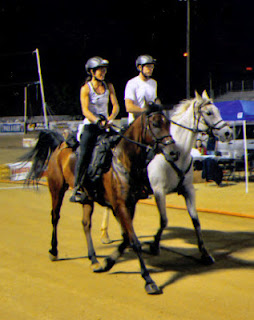 Garrett and Lisa Ford, pictured.

Tuesday, 19 June 2012
20% off hay analysis!!

Barefoot hoofboot distributor Trelawne Equine
is working with feed manufacture Dengie Crops Ltd to help educate horse owners
about the availability of hay analysis, which is used to assess a horse’s
nutritional status.
Dengie’s forage analysis service normally
costs £20 for the basic analysis which includes protein, fibre and oil, or £30
for the comprehensive test which includes minerals. However the company is
offering 20% off this price to customers that quote this code:
DHFPRIM2012
Simply email feeds@dengie.com with your personal details, quoting this code. You will then receive a ration evaluation sheet which should be returned with a sample from your regular hay ration.
Friday, 3 June 2011
A New Lightweight in the Hoof Boot World

Wednesday, 25 May 2011
The NEW Easyboot Trail- Could THIS Hoof Boot Really Be The Easiest Boot In The World?
The Easyboot trail hoof boot from Easycare has arrived! This simple hoof boot is so quick and easy to use, but unlike some other 'easy to use hoof boots' already on the market these boots offer superb traction from the trusted pattern of theOld Mc G2 hoof boot and will not come off (when used correctly of course!). The size chart for the new trail boot is the same as the Old Mac G2, and this boot will accomodate around 6-8 weeks of growth making it ideal even for farrier/ pasture trimmed horses.
Wednesday, 12 January 2011
How Not to Fit Easyboot Gloves!

The Easyboot Glove is my personally boot of choice, and her feet are luckily a good shape for them. Her front measure 110mm x 110mm, which put her between a 00 and a 0. Using the fitkit, I determined that the 00.5 was as small as she could go, but with pads in the boots they were a little trickier to get on so a compromise was made and a size 0 was used. Now, as you can see from the picture, they are gappy and even the gaiter is loose! They do not grip the wall as tight as I would like, and there is a clear channel at the front of the boot but much to my surprise, they have not moved an inch during our outings! I must make it clear that we are only walking and trotting in hand for no more than an hour, and she does have straight movement which I am sure helps, but there have been a few 'merry moments' along the way which I would have expected to cause a problem! She is about ready to go down into a smaller size now as she is used to having the boots applied, but I thought it was interesting to see and testament to the superb design of the boots that even when they were incorrect size they would cope with a basic amount of work. Of course we don't advise that the boots be fitted like this for riding, but it does support the idea that a well fitting glue on hoof boot (without the glue!) can be used to lead horses to and from the field, or to an arena and back for example and be used a bit like a very quick and easy 'slipper'.
Subscribe to:
Posts (Atom)

